
What We Miss When We Stop Noticing
19 August 2026
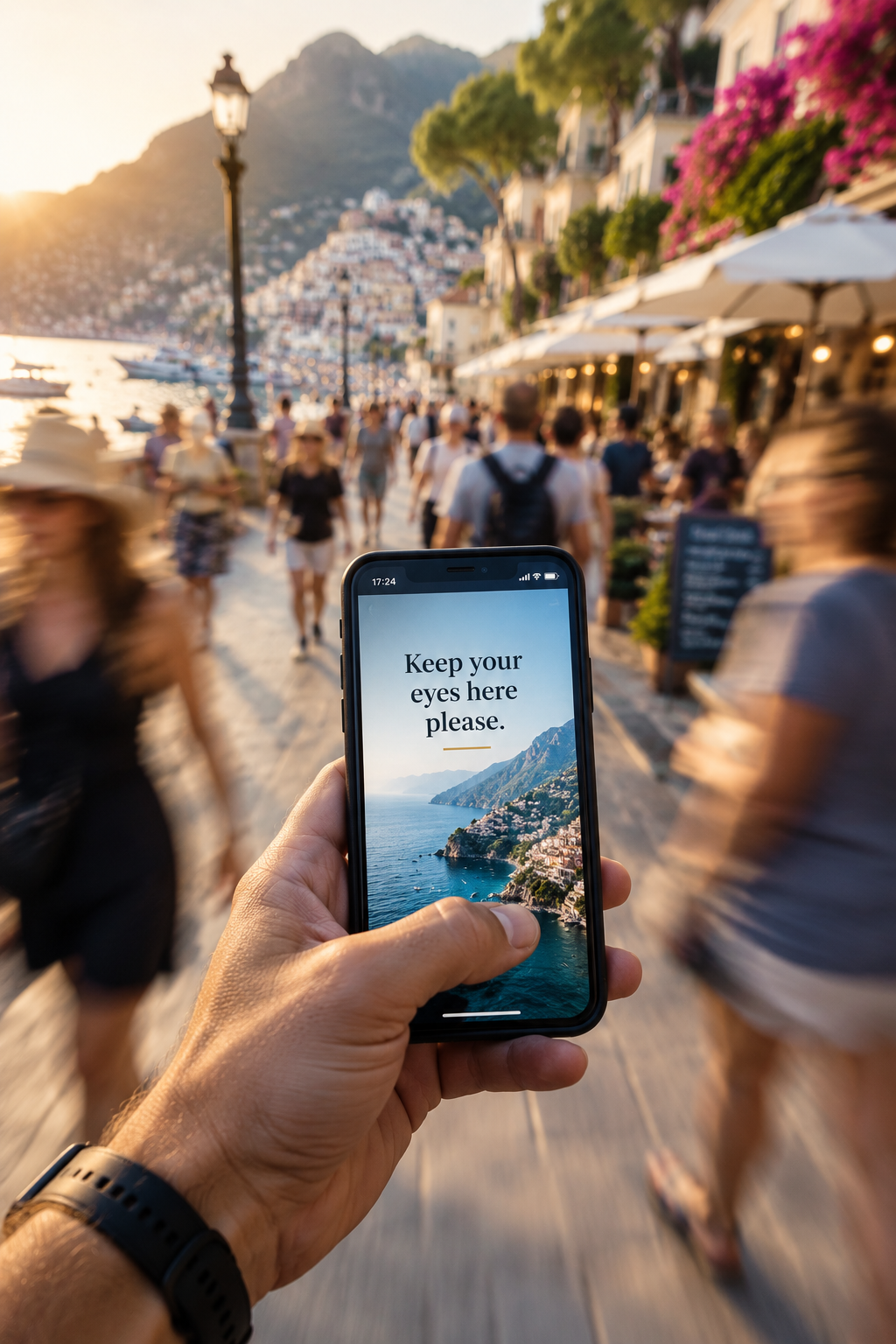
When I look back at my life, I sometimes wonder how much I would have remembered if I had always been able to hear the world in the same way as everyone else. My hearing difficulties meant I couldn’t always rely on sound to understand what was happening around me, so from an early age I learnt to pay attention to other things. I watched faces, expressions and gestures, and became aware of the little things people did while they were talking. I didn’t think of it as a skill at the time. It was simply another way of making sense of the world.
It took me many years to realise that this had affected more than the way I listened. It had changed the way I noticed.
When I left Brisbane at nineteen and began travelling, I thought I was collecting experiences. I remembered the places I had visited, the journeys I had taken and the adventures that happened along the way. Like most travellers, I took photographs and wrote things down because I didn’t want to forget where I had been. I thought the countries would eventually become the stories I would tell.
When I finally sat down to write my memoir more than twenty years later, I discovered something I hadn’t expected. The places were important, but they weren’t what I remembered most clearly. I remembered people. I remembered conversations, acts of kindness, disagreements, misunderstandings and small moments that had seemed ordinary when they happened. The countries provided the backdrop, but the details I had noticed along the way were often what brought the memories back.
That made me wonder how much of our lives we experience without really noticing them.
The moments we don’t know are important
We tend to notice the big moments because they announce themselves. A new job, a major journey, a difficult diagnosis, a relationship ending or a completely unexpected change in direction is difficult to ignore. We know something important is happening, so we pay attention.
The ordinary moments are different. A conversation that lasts five minutes, somebody holding a door open, a stranger making you laugh, the expression on someone’s face when they hear unexpected news or the way a person speaks when they are trying not to show that something has upset them can pass almost unnoticed. There is nothing about these moments to tell us that we will remember them years later.
Yet they can become the details that bring an entire period of our lives back.
I think that is one of the strange things about memory. We don’t always remember the things we deliberately tried to remember. Sometimes a small detail we barely noticed at the time becomes the thing that unlocks everything else.
Looking isn’t the same as noticing
We spend a remarkable amount of time looking at things without necessarily seeing them. We can walk through the same street every day and barely remember what is there, sit with somebody while thinking about something else or listen to a conversation while preparing what we are going to say rather than paying attention to what the other person is actually telling us.
Being present isn’t simply being in the same place. Noticing requires us to become interested in what is happening while it is happening, rather than immediately moving our attention towards whatever comes next.
Travel made this easier for me because unfamiliar places naturally demand attention. When you don’t know where you are going, you look for signs. When you don’t know the people around you, you watch them. When everything is unfamiliar, even ordinary things become interesting because you haven’t yet learnt to ignore them.
The difficulty is that familiarity gradually does the opposite. Once we know the route, the people and the surroundings, we stop looking as carefully because our brains already know what to expect. Something that once seemed interesting becomes part of the background.
Perhaps that is why travelling can make us feel so alive. It isn’t necessarily because everything we experience is more exciting. We are simply paying more attention to it.
My hearing taught me something I didn’t realise
For years, I thought the main consequence of my hearing difficulties was that I had to work harder to understand conversations. Looking back, I think something else was happening at the same time.
Because I couldn’t always hear every word, I became more attentive to what was visible. I learnt to watch people rather than simply listen to them. I became interested in what happened between the words, and sometimes what someone did told me more than what they said.
That didn’t mean I could always understand people correctly. I couldn’t. Noticing isn’t the same as knowing, and observation doesn’t give us a perfect explanation of another person’s behaviour. What it can do is give us more information and make us curious rather than certain.
That distinction has stayed with me. There is a big difference between deciding that we know what someone means and noticing enough to realise that we might not know.
Travel gave me a reason to look again
One of the things I enjoyed about travelling was that I was constantly surrounded by things I didn’t understand yet. Different countries had different ways of doing things, different expectations and different kinds of people. I couldn’t assume that everything would work the way it did at home, which meant I had to pay attention.
Sometimes that meant noticing something practical, such as where I was supposed to go or what I was supposed to do. Other times it meant watching people and trying to understand what was happening around me.
The longer I travelled, the more I realised that some of the most memorable parts of a journey weren’t necessarily the places everyone told me I should see. They were often the moments I hadn’t planned for, when something unexpected happened or somebody did something I hadn’t anticipated.
Those moments were impossible to schedule because I didn’t know they were coming.
All I could do was notice them when they arrived.
Writing the memoir changed what I thought mattered
I began writing my memoir because I wanted to preserve the story of my life before some of the details disappeared. At first, I thought that meant remembering the places and the sequence of events accurately. I had spent years travelling, so I naturally thought the geography would provide the structure.
Instead, the writing kept taking me back to people and moments.
I found myself remembering what somebody had said, how another person had reacted, the circumstances surrounding a particular conversation or some small act of kindness that had stayed with me for years. I realised that my memories weren’t organised around a map. They were organised around what I had noticed.
That was an important discovery for me because it changed how I understood the book I was writing. It wasn’t really a record of everywhere I had been. The travel created the circumstances, but the people and the moments between them were what had remained.
In a way, I had been collecting observations without realising that I was collecting them.
We can’t notice everything
I’m not suggesting that we should walk through life trying to observe every detail. That would be exhausting, and we’d probably spend so much time looking for things to notice that we’d miss what was actually happening.
Nor do I think technology is the enemy of attention. Phones, cameras and social media can preserve experiences and keep us connected to people who would otherwise be difficult to reach. I have used many of those things myself, and some of the photographs and notes I made while travelling eventually became part of my memoir.
The difference is that recording something doesn’t necessarily mean we experienced it closely enough to remember it.
A photograph can tell us where we were, but it can’t always tell us what caught our attention. A recording can preserve someone’s words, but it doesn’t necessarily capture what we noticed about the person saying them. The technology can preserve the moment, but we still have to be present enough to experience it.
That part remains our responsibility.
The things we notice become part of our story
We don’t know which ordinary moment will become important later. We don’t know which conversation we’ll remember in twenty years, which person will unexpectedly influence our lives or which tiny detail will bring an entire period back to us.
Perhaps that is why noticing has become such an important idea for me. It isn’t simply about paying attention to other people, and it isn’t about becoming more observant for the sake of it. It is about giving ourselves a better chance of actually experiencing the life we are living while we are living it.
My hearing difficulties taught me to look beyond what I could hear. Travelling taught me to pay attention to what was unfamiliar. Writing my memoir eventually showed me that the things I had noticed, often without understanding their significance at the time, had become some of the most valuable parts of my memories.
I thought my hearing difficulties had taught me to listen differently. It took me much longer to realise that they had also taught me to notice differently. Looking back now, I think that may have been one of the more valuable things they gave me, because a life isn’t only made up of the big moments we know will matter. Much of it is made up of ordinary moments that only become important because, at some point, we were paying enough attention to notice them.
Topics:
#Noticing #Observation #PayingAttention #ListeningDifferently #Awareness #Perspective #Memories #TravelMemoir #MemoirWriting #AustralianAuthor #DJGifford #NoIWontBuyYouADrink