One of the unexpected benefits of hearing loss was that I spent a lot of time watching people.
While everyone else seemed busy talking, I was often trying to work out what was actually happening.
After travelling through multiple countries, hostels, hospitals, airports, rugby clubs, detention centres, and more pubs than I care to admit, I kept noticing the same thing.
The people who seemed to cope best with life weren't always the smartest.
They weren't always the richest.
They weren't always the most educated.
But they were usually organised.
Not colour-coded-spreadsheet organised.
Just organised enough to remember where they were supposed to be and why.
Back in the 1990s, we somehow managed to arrange to meet someone two weeks later at 6:00 p.m. on a random street corner and, remarkably, both people turned up.
No text message arrived five minutes beforehand saying:
"Running late."
Translation:
"I've just got off the couch and haven't started getting ready yet."
We simply knew where we were meant to be and organised ourselves accordingly.
It wasn't magic.
It was organisation.
Over the years I hoped that some of the things I was observing would become more obvious to everyone else. I genuinely thought that as society became more connected, we'd gradually build a better world.
Instead, the internet arrived.
Then social media arrived.
Then everyone got a personal broadcasting station in their pocket.
And somehow authenticity started losing a fight against packaging.
Today, people spend extraordinary amounts of time presenting themselves, branding themselves, marketing themselves, positioning themselves, and explaining themselves.
Meanwhile, many struggle to organise themselves.
It's a remarkable achievement.
We've created a world where people can build a personal brand before they can reliably arrive on time.
The more I thought about it, the more I became convinced that organisational skills thrive in authentic environments.
Reality is a wonderful teacher.
Reality doesn't care about your image.
Reality doesn't care about your followers.
Reality doesn't care whether your morning routine has its own hashtag.
Reality simply asks:
Did you remember?
Did you prepare?
Did you follow through?
Authentic environments expose weaknesses early, when they are still small enough to fix.
Pretentious environments do the opposite.
They allow people to package confusion as confidence and chaos as individuality.
For a while, it can look quite impressive.
Until reality eventually arrives and asks for identification.
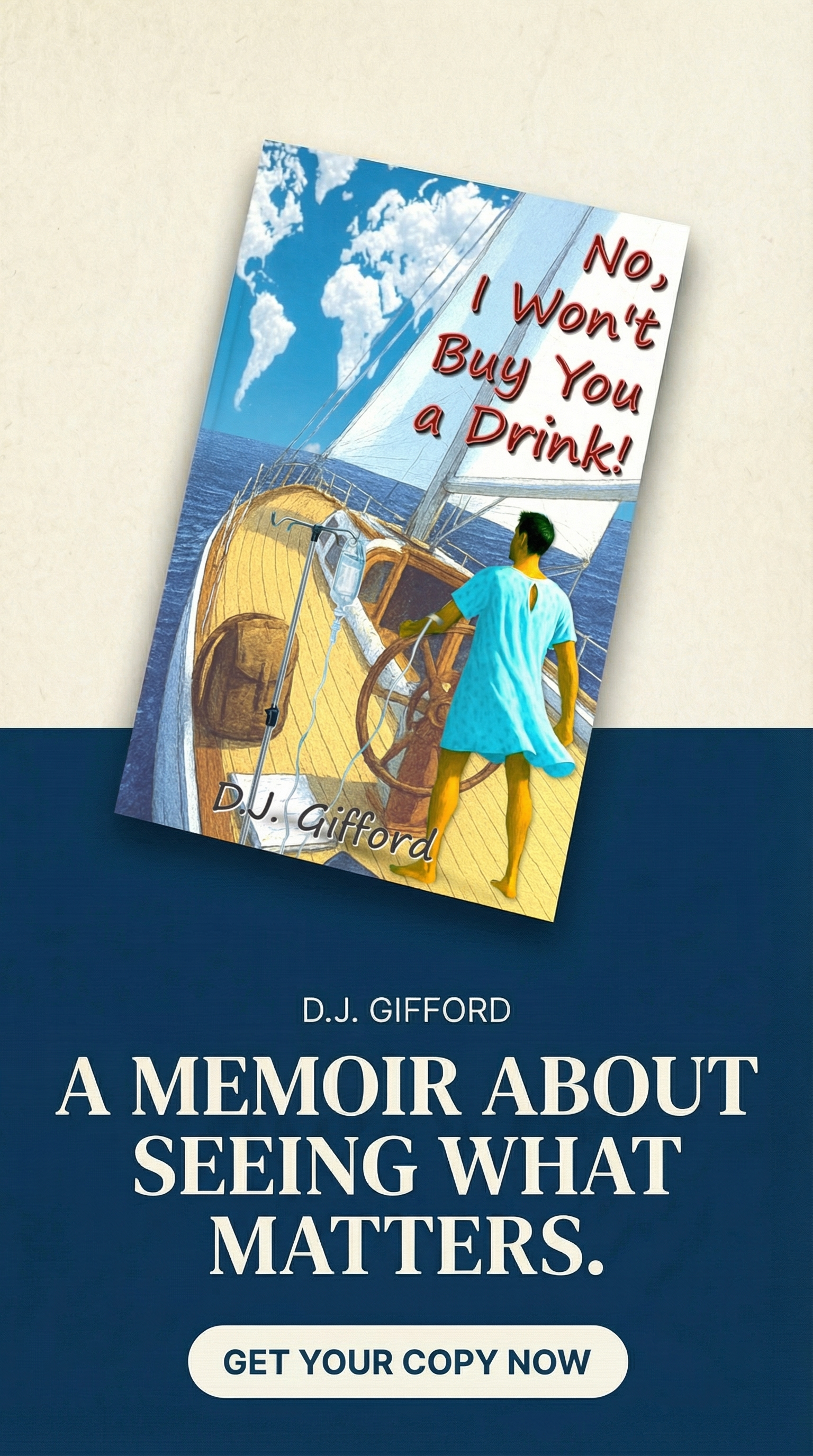
One of the reasons I finally wrote No, I Won't Buy You a Drink! was because I felt many of the ideas I'd been carrying around for years were becoming more relevant, not less.
The world seemed increasingly distracted.
Increasingly packaged.
Increasingly performative.
The simple things that help people function well—attention, responsibility, preparation, honesty, organisation—were becoming strangely unfashionable.
Yet those same skills still seemed to determine who navigated life well and who constantly found themselves overwhelmed.
The lesson I kept returning to was surprisingly simple.
Before we teach people how to market themselves, perhaps we should teach them how to manage themselves.
The world already has plenty of packaging.
It could probably use a little more organisation.