
Getting Lost Was Part of the Plan
25 June 2026
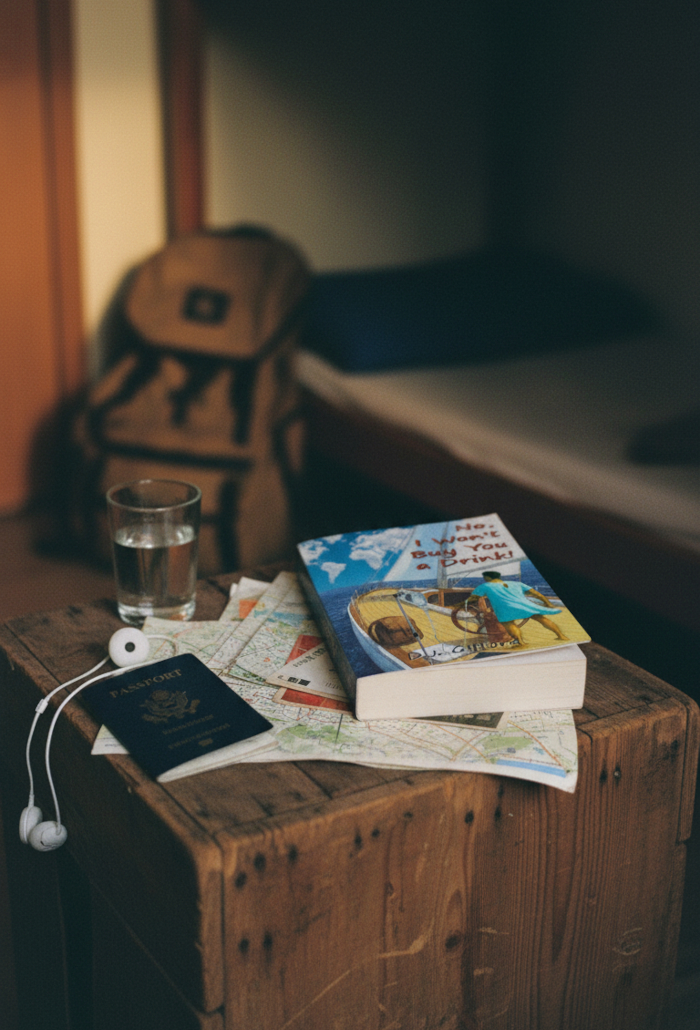
If you backpacked through the 1990s, you'll probably understand something younger travellers never had the chance to experience.
Not knowing.
Not knowing where you'd sleep that night. Not knowing whether the bus would actually arrive. Not knowing if the recommendation from another backpacker would lead you to the best place you'd ever stayed or somewhere bed bugs had already claimed as their own. Even staying in touch with home involved a degree of optimism. If nobody answered the phone, there was a good chance they wouldn't hear from you again for weeks.
At the time, none of it seemed unusual.
It was simply the way travel worked.
Looking back now, I sometimes think uncertainty was one of the greatest gifts that era of travel gave us. We accepted it because we had no real alternative. We carried guidebooks that were already out of date, scribbled directions on scraps of paper and relied on conversations with strangers far more than we relied on maps. Every day involved a few educated guesses and the quiet hope that things would somehow work out.
Most of the time they did.
Technology has undoubtedly made travel easier. Today it's possible to track your luggage, translate conversations, book accommodation while standing on the footpath and let everyone at home know exactly where you are with the press of a button. None of those things are bad. In fact, I'd be reluctant to give many of them up.
What I do miss is the uncertainty.
When I travelled, the unknown wasn't an inconvenience. It was simply part of the journey. If you wanted to know where to eat, you asked someone. If you were looking for somewhere to stay, you spoke to another traveller or took a chance on a place that looked promising. Every conversation had the potential to change your plans because people, not algorithms, were often your best source of information.
Even living with hearing loss seemed to fit naturally into that world. I'd spent much of my life piecing conversations together from expressions, body language and fragments of sound. Travelling before smartphones felt strangely familiar. Nobody had all the information. We were all making educated guesses as we went.
Of course, not every guess worked out well. Some led to unforgettable experiences. Others became stories that were much funnier in hindsight than they felt at the time. Looking back now, I'm grateful for both.
I don't miss folding maps that somehow became larger every time you tried to put them away, and I'm certainly not nostalgic for searching for a public telephone when things went wrong. Technology has solved countless problems that genuinely needed solving.
What I do wonder is whether we've also solved away a small part of what made travel such a remarkable teacher.
When everything is known before we arrive, there's a little less room for surprise. A little less room for curiosity. A little less room for the unexpected conversation that sends us somewhere we'd never planned to go.
Perhaps that's why backpackers from that era still recognise one another so easily. It isn't simply because we travelled. Millions of people travel every year.
It's because we travelled before certainty became something we carried in our pockets.
Looking back, I think getting lost was never really the problem.
Sometimes it was the plan.
And sometimes, not knowing where you were going was exactly how you discovered where you needed to be.
Topics:
#TravelReflections #Backpacking #1990sTravel #TravelMemoir #AustralianAuthor #DJGifford #Observation #Authenticity #NoIWontBuyYouADrink #AdventureTravel